
Introduction to PVC Union Ball Valves
In the world of plumbing and fluid control systems, finding reliable components that balance performance, cost, and ease of use is crucial. One such standout product is the PVC union ball valve, a versatile piece of equipment designed to regulate the flow of liquids with precision and minimal effort. Manufactured by reputable suppliers like Zhejiang HONGKE Valves Factory, these valves are built to withstand everyday demands while providing long-term value.
Zhejiang HONGKE Valves Factory, based in China, specializes in high-quality plastic valves that meet international standards. Their PVC union ball valves are particularly popular due to their robust construction and adaptability to various environments, from residential water systems to industrial pipelines. Whether you’re a homeowner tackling a DIY project or a professional installer, understanding the ins and outs of these valves can help you make informed decisions.
This guide will delve into the features, benefits, types, installation processes, maintenance tips, and applications of PVC union ball valves. We’ll also touch on specific variations, ensuring you have all the information needed to select the right one for your needs.
What Is a PVC Union Ball Valve?
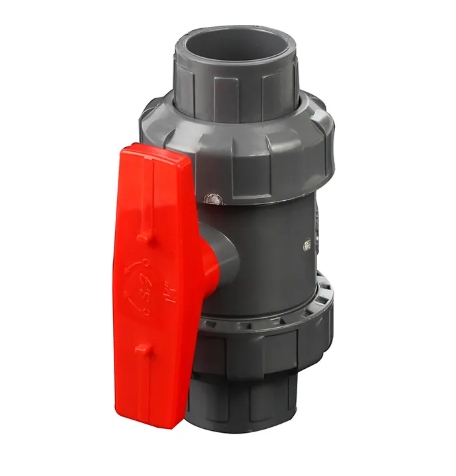
A PVC union ball valve is a type of quarter-turn valve made primarily from polyvinyl chloride (PVC), a durable thermoplastic material known for its chemical resistance and lightweight properties. The “union” aspect refers to the design that allows for easy disconnection and reconnection without cutting pipes, making it a favorite for maintenance-heavy setups.
At its core, the valve features a spherical ball with a hole through its center. When the handle is turned 90 degrees, the ball rotates to either align the hole with the pipe (open position) for full flow or perpendicular to it (closed position) to stop the flow completely. This simple mechanism ensures quick operation and a tight seal.
Key Components of a PVC Union Ball Valve
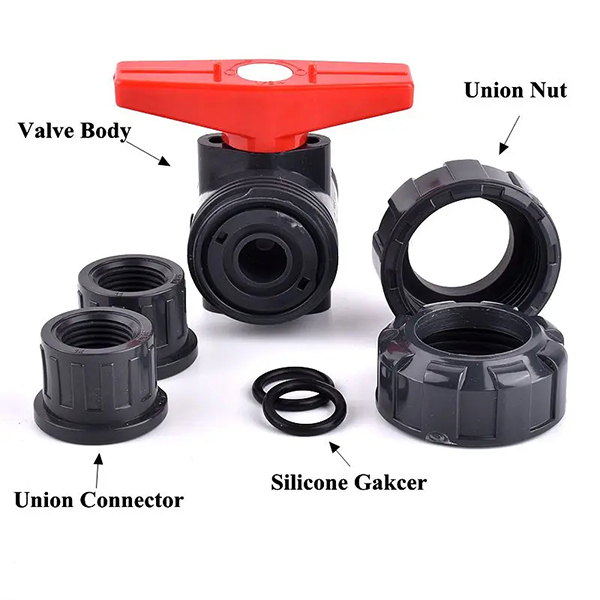
Breaking it down further, a typical PVC union ball valve includes several essential parts:
- Body and Ball: The main housing and the rotating ball are both made from PVC or reinforced variants for strength. The ball’s smooth surface minimizes friction and wear.
- Union Nuts and Ends: These threaded or slip-on connectors allow the valve to be removed from the pipeline without tools beyond a wrench, facilitating repairs.
- Seals and O-Rings: Usually made from EPDM or Viton rubber, these provide leak-proof performance even under pressure.
- Handle: Often ergonomic and color-coded for easy identification, it provides leverage for smooth operation.
Zhejiang HONGKE Valves Factory ensures that each component is precision-molded to prevent common issues like leaks or jams, drawing from years of expertise in valve production.
Benefits of PVC Union Ball Valves
Choosing a PVC union ball valve over metal alternatives brings numerous advantages, especially in environments where corrosion is a concern. Here are some key benefits:
Corrosion Resistance and Durability
PVC is inherently resistant to rust, acids, and many chemicals, making these valves ideal for water treatment, irrigation, and chemical processing. Unlike brass or steel valves, they won’t degrade over time in moist or aggressive settings. Users report that products from Zhejiang HONGKE Valves Factory last significantly longer, reducing replacement costs.
Ease of Installation and Maintenance
The union design is a game-changer. You can install or remove the valve without disrupting the entire system, saving time and labor. For instance, in a plumbing repair, you simply loosen the nuts, swap the valve, and tighten again—no pipe cutting required.
Cost-Effectiveness
These valves are affordable without compromising quality. A standard 1 inch PVC union ball valve might cost a fraction of its metal counterpart, yet it handles pressures up to 150-230 PSI depending on the model. This makes them accessible for both small-scale and large projects.
Lightweight and Versatile
Weighing much less than metal valves, PVC versions are easier to handle and transport. They’re suitable for above-ground and underground installations, with options for threaded, socket, or flanged connections.
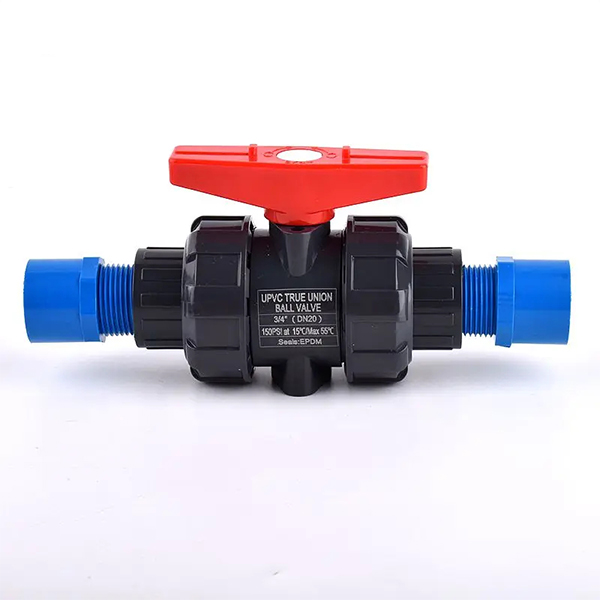
In addition, the full-port design ensures minimal pressure drop, maintaining efficient flow rates. For those needing enhanced features, a PVC double union ball valve offers unions on both ends for even greater flexibility.
Types and Sizes of PVC Union Ball Valves
PVC union ball valves come in various configurations to suit different applications. Understanding the options helps in selecting the perfect fit.
Standard vs. True Union Designs
A standard union ball valve has a single union for basic disconnection, while a true union (or double union) features unions on both sides. The PVC double union ball valve is particularly useful in systems requiring frequent servicing, as it allows complete isolation.
Popular Sizes
- 1/2 PVC Union Ball Valve: Perfect for residential plumbing, such as garden hoses or small water lines. It’s compact and handles low to medium flows efficiently.
- 1 Inch PVC Union Ball Valve: A go-to for larger household systems or light industrial use, offering a balance of size and capacity.
Zhejiang HONGKE Valves Factory produces these in Schedule 40 or 80 ratings, ensuring compatibility with standard PVC pipes.
Specialized Variants
For high-pressure needs, look for reinforced models. Some include check mechanisms to prevent backflow, adding an extra layer of safety.
Applications of PVC Union Ball Valves
These valves are incredibly versatile, finding use across multiple sectors.
Residential Plumbing
In homes, a PVC union ball valve controls water supply to fixtures like sinks or toilets. Its non-toxic material makes it safe for potable water, and the easy shut-off prevents floods during repairs.
Irrigation and Agriculture
Farmers rely on them for drip systems and sprinklers. The 1/2 PVC union ball valve is common here, resisting UV exposure and soil chemicals.
Industrial and Commercial Uses
In factories, they manage chemical flows or cooling systems. A 1 inch PVC union ball valve might regulate process lines, while larger sizes handle bulk fluids. Zhejiang HONGKE Valves Factory supplies valves certified for such demanding environments.
Pool and Spa Systems
Their chlorine resistance makes them ideal for swimming pools, ensuring smooth circulation without corrosion.
For more on industrial valve standards, check this authority resource on thermoplastic valves.
How to Install a PVC Union Ball Valve
Proper installation is key to performance. Follow these steps for a secure setup.
Preparation
Gather tools: PVC primer, cement, pipe cutter, and wrench. Ensure the pipe is clean and dry. For a true union model, disassemble the nuts and ends first.
Step-by-Step Installation
- Cut the Pipe: Measure and cut squarely. Deburr edges to prevent leaks.
- Apply Primer and Cement: Coat the pipe ends and valve sockets with primer, then cement. Insert quickly and hold for 30 seconds.
- Assemble Unions: Slide nuts over pipes, attach ends, and tighten evenly. Avoid over-tightening to prevent cracks.
- Test for Leaks: Pressurize the system and check joints. If leaks appear, retighten or recement.
For threaded connections, use Teflon tape sparingly. Always install with the handle accessible for operation—aim for a 90-degree swing clearance.
Internal link: Learn more about our PVC valve installation tips.
Common Installation Mistakes to Avoid
Don’t glue ends while attached to the body; this risks solvent damaging seals. Also, ensure flow direction isn’t critical, as these valves are bidirectional.
Maintenance Tips for Longevity
Regular care extends the life of your PVC union ball valve.
Routine Checks
Inspect for cracks or leaks quarterly. Operate the handle periodically to prevent seizing.
Cleaning and Repairs
If flow reduces, disassemble via unions, clean the ball with mild soap, and replace worn seals. Zhejiang HONGKE Valves Factory provides replacement parts for easy fixes.
Troubleshooting Issues
- Leaking: Tighten nuts or replace O-rings.
- Stiff Handle: Lubricate with silicone spray; avoid petroleum-based products.
- No Flow: Check if the ball is aligned properly.
For detailed maintenance, refer to our valve care guide.
Why Choose Zhejiang HONGKE Valves Factory?
As a leading manufacturer in Zhejiang, China, HONGKE focuses on innovation and quality. Their PVC union ball valves undergo rigorous testing for pressure and durability, ensuring compliance with ASTM standards. Customers praise their responsive service and competitive pricing.
Explore their full range at HONGKE’s product page.
Comparing PVC Union Ball Valves to Other Types
While metal valves offer higher temperature tolerance, PVC excels in cost and corrosion resistance. For example, a PVC double union ball valve outperforms brass in acidic environments but may not suit hot water over 140°F.
| Feature | PVC Union Ball Valve | Brass Ball Valve | Stainless Steel Ball Valve |
|---|---|---|---|
| Corrosion Resistance | Excellent | Good | Superior |
| Weight | Lightweight | Heavy | Heaviest |
| Cost | Low | Medium | High |
| Max Pressure | 150-230 PSI | 400+ PSI | 1000+ PSI |
| Applications | Water, Chemicals | General Plumbing | High-Pressure Industries |
This table highlights why PVC is often the smart choice for everyday use.
Environmental and Safety Considerations
PVC union ball valves from reputable sources like HONGKE are lead-free and recyclable, supporting eco-friendly practices. Always follow safety protocols during installation, wearing gloves to handle solvents.
Conclusion
The PVC union ball valve stands out as a reliable, user-friendly solution for fluid control. With options like the 1/2 PVC union ball valve for small tasks or the PVC double union ball valve for complex systems, there’s a fit for every need. By choosing products from Zhejiang HONGKE Valves Factory, you invest in quality that lasts.
For more insights, visit benefits of PVC valves or our internal comparison page.