
In the world of fluid control, the pvc ball valve 1/2 inch is perhaps the most versatile and frequently utilized component. Whether you are a professional landscaper installing a micro-irrigation zone, a maintenance engineer repairing a branch line, or a wholesaler stocking up for the farming season, getting the “small details” right on this small-diameter valve is crucial for system integrity.
Despite its compact size, a 1/2″ valve must withstand significant environmental pressure, UV exposure, and frequent manual cycling. At HONGKE, we have spent 17 years refining our manufacturing process to ensure that even our smallest valves deliver industrial-grade performance.
1. Threaded or Slip? Choosing Your Connection Type
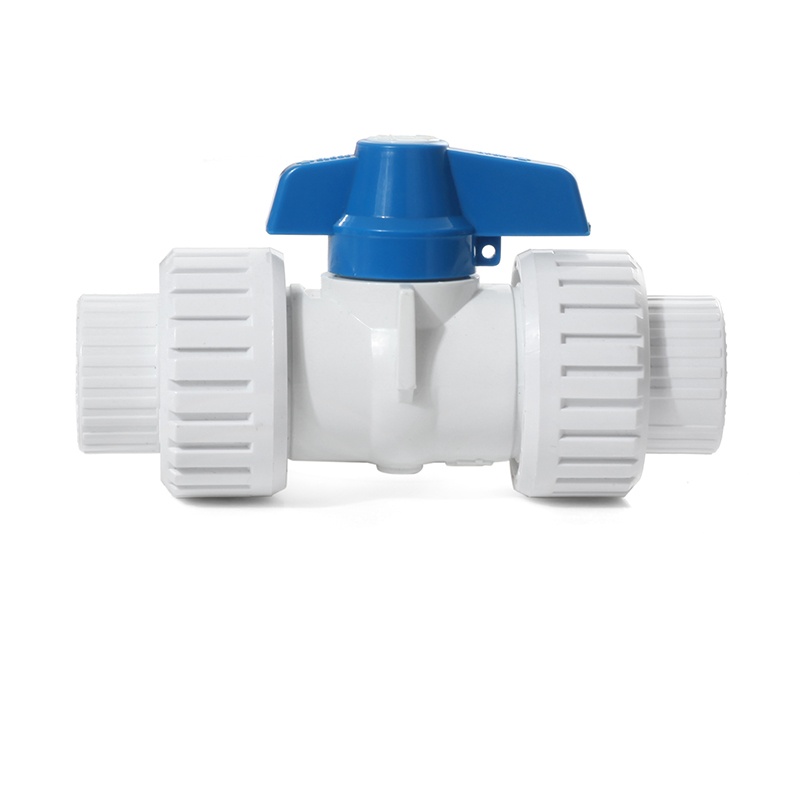
The most common hurdle when purchasing a pvc ball valve 1/2 inch is determining the connection style. Selecting the wrong one can lead to unnecessary adapters and potential leak points.
- Threaded (NPT/BSPT): Best for systems that may require future maintenance or disassembly. Threaded valves allow you to screw the valve directly onto metal or plastic threaded pipes without the use of permanent glue.
- Slip (Socket): Ideal for permanent, high-strength installations. These are bonded using PVC solvent cement, creating a “cold weld” that is virtually leak-proof. This is the standard for most agricultural irrigation and pool systems.
Pro Tip: If you are repairing an existing line in a tight space, a threaded valve often saves time by eliminating the need for drying time associated with solvent glue.
2. Why the 1/2″ Size is the “Workhorse” of Irrigation
Small-diameter pipes are the veins of any irrigation network. The pvc ball valve 1/2 inch is specifically designed for:
- Drip Irrigation Zones: Controlling flow to specific garden beds or greenhouse benches.
- Residential Sprinklers: Serving as a localized shut-off for individual sprinkler heads or small turf zones.
- Equipment Manifolds: Managing water intake for filtration systems or chemical injectors.
Because these valves are often installed in “dead-end” branch lines, they face stagnant water and high sun exposure. HONGKE’s UPVC material is specifically formulated to resist UV degradation and chemical scaling, ensuring the handle doesn’t become brittle and the ball doesn’t seize over time.
3. The HONGKE Advantage: Why Wholesale Buyers Choose Us
When you search for a pvc ball valve 1/2 inch, you aren’t just looking for a piece of plastic; you are looking for a reliable supply chain. Here is why HONGKE (Zhejiang Hongke Valve Co., Ltd.) is the preferred partner for global distributors:
Factory-Direct Cost Control
Because we are an Industry and Trade Integrated factory, we eliminate the middleman. For a high-volume item like the 1/2″ valve, even a few cents’ difference in unit price can significantly impact your project budget or retail margins.
High-Volume Reliability (3000 PCS MOQ)
Our 3000 PCS MOQ per size ensures that we can dedicate our automated production lines to your order. This scale allows us to maintain strict tolerances and ensure that every valve in the crate—from the 1st to the 3000th—meets our 1.0–1.6MPa pressure rating.
Ergonomic Design for Small Sizes
Small valves can sometimes be difficult to turn, especially for older users or in cold weather. HONGKE 1/2″ valves feature enlarged, ergonomic handles that provide extra leverage, making operation smooth and easy even after months of inactivity.
4. Quick Installation Tips for 1/2″ PVC Valves
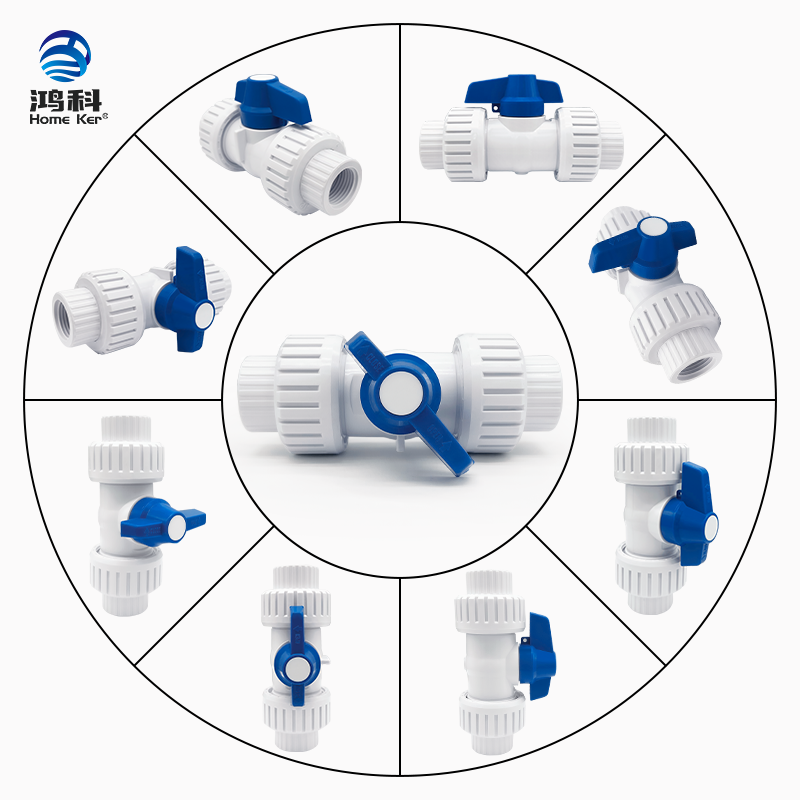
- Deburr the Pipe: Before installing a slip valve, ensure the pipe end is smooth and free of burrs. This ensures a full surface bond with the solvent cement.
- Don’t Over-Tighten: For threaded 1/2″ valves, hand-tighten plus a quarter turn with a wrench is usually sufficient. Over-tightening can crack the PVC body.
- Check the Flow Arrow: While ball valves are generally bi-directional, checking for a flow arrow on the body ensures you are installing it according to the manufacturer’s optimal design.
Conclusion: Quality You Can Trust at a Scale You Need
The pvc ball valve 1/2 inch may be small, but its role in your water system is massive. By choosing a supplier that prioritizes material quality, UV resistance, and manufacturing precision, you save yourself from the headaches of leaks and broken handles down the road.
HONGKE is ready to support your next large-scale procurement with factory-direct pricing and nearly two decades of expertise.
Ready to restock your inventory with high-quality 1/2″ valves? [Inquire with HONGKE’s Export Team Today]
People Also Ask (FAQ)
Q: Can a 1/2 inch PVC ball valve handle high pressure? A: Yes. HONGKE’s 1/2″ valves are rated for pressures up to 1.6MPa (PN16), making them more than capable of handling standard municipal water pressure and high-pressure irrigation pumps.
Q: Is 1/2 inch the same as 20mm for PVC valves? A: In the PVC world, “1/2 inch” usually refers to the Imperial (IPS) standard, while “20mm” refers to the Metric standard. While they are close in size, they are not interchangeable. HONGKE provides both standards to meet global requirements—please specify which you need during your inquiry.
Q: Why is there a 3000 PCS MOQ for this size? A: Because 1/2″ valves are high-demand items, our factory runs large-scale automated cycles to keep costs low. The 3000 PCS MOQ allows us to offer you the most competitive wholesale price while maintaining consistent, factory-direct quality.
Q: Do these valves work for pool systems as well as irrigation? A: Absolutely. Our UPVC material is resistant to chlorine and other pool chemicals, making the pvc ball valve 1/2 inch an excellent choice for pool chemical feeders and small water features.