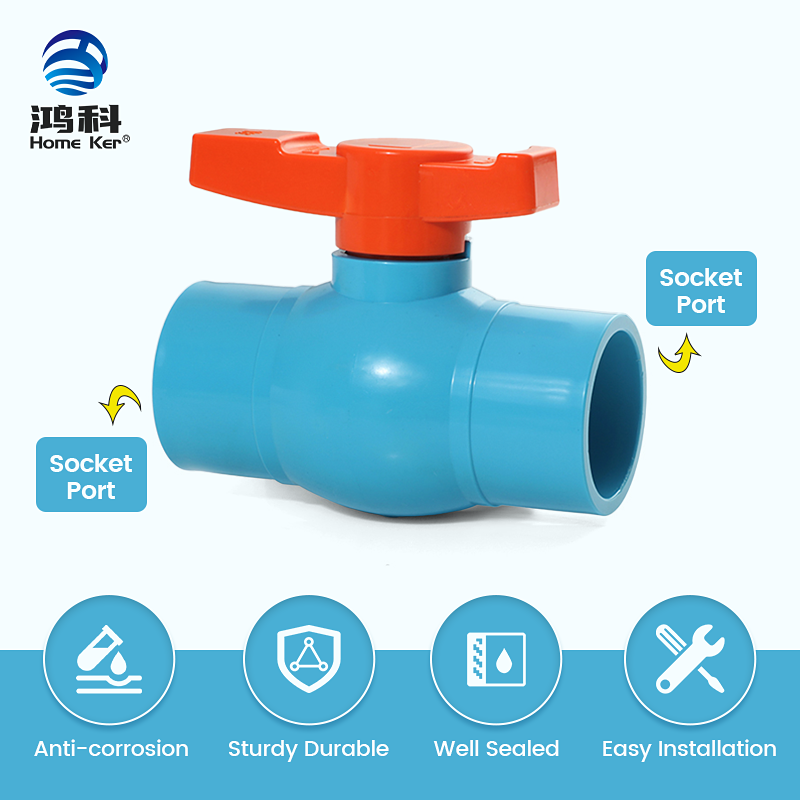

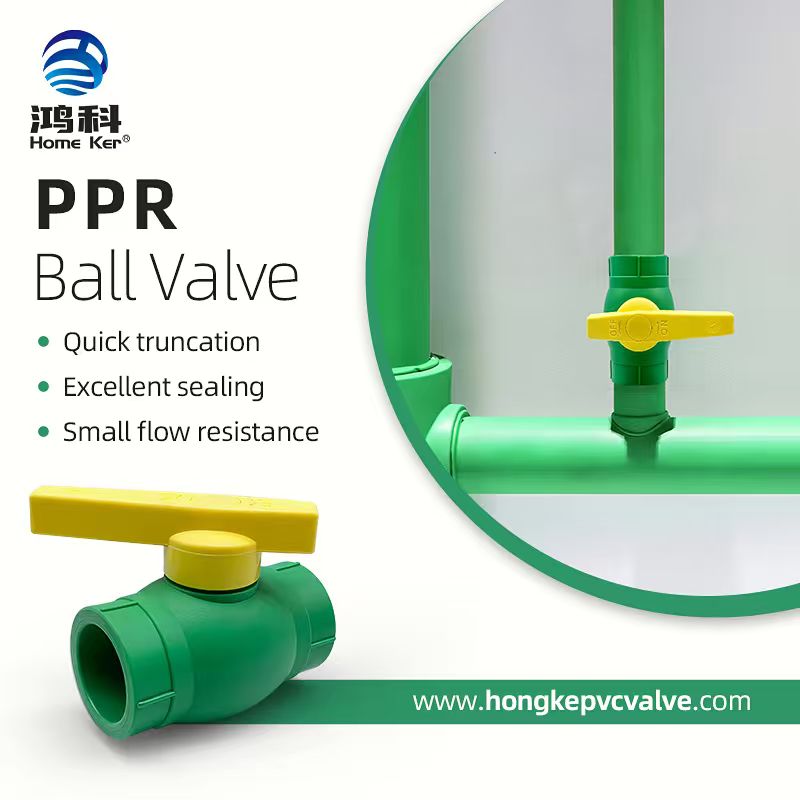
In the modern plumbing and water distribution industry, the move toward sustainable and long-lasting materials has made Polypropylene Random Copolymer (PPR) the premier choice for engineers worldwide. Whether for residential potable water or industrial fluid transport, the PPR Ball Valve stands as a critical component, ensuring leak-proof performance and chemical stability.
However, for procurement managers, the challenge is not just selecting the right material, but finding a supplier that can bridge the gap between high-volume manufacturing and flexible inventory management. At HONGKE (Zhejiang Hongke Valve Co., Ltd), we leverage 17+ years of expertise as an integrated factory to deliver high-performance PPR solutions with industry-leading flexibility.
Understanding the Material Superiority of PPR
Why has the PPR Ball Valve become the global standard for modern water systems? The answer lies in its unique molecular structure. Unlike traditional metal valves, PPR offers:
- Corrosion Resistance: PPR is chemically inert, meaning it will not rust or corrode when exposed to varying water pH levels. This is vital for maintaining water purity in drinking water systems.
- Thermal Insulation: PPR has low thermal conductivity, which significantly reduces heat loss in hot water lines and prevents condensation in cold water systems.
- Smooth Internal Surface: The exceptionally smooth bore of our PPR valves minimizes friction loss and prevents the buildup of limescale or “scaling,” which often plagues brass or iron alternatives.
Key Technical Parameters of HONGKE PPR Ball Valves
Our engineering team optimizes every PPR Ball Valve to meet rigorous international standards for ambient and pressurized water systems:
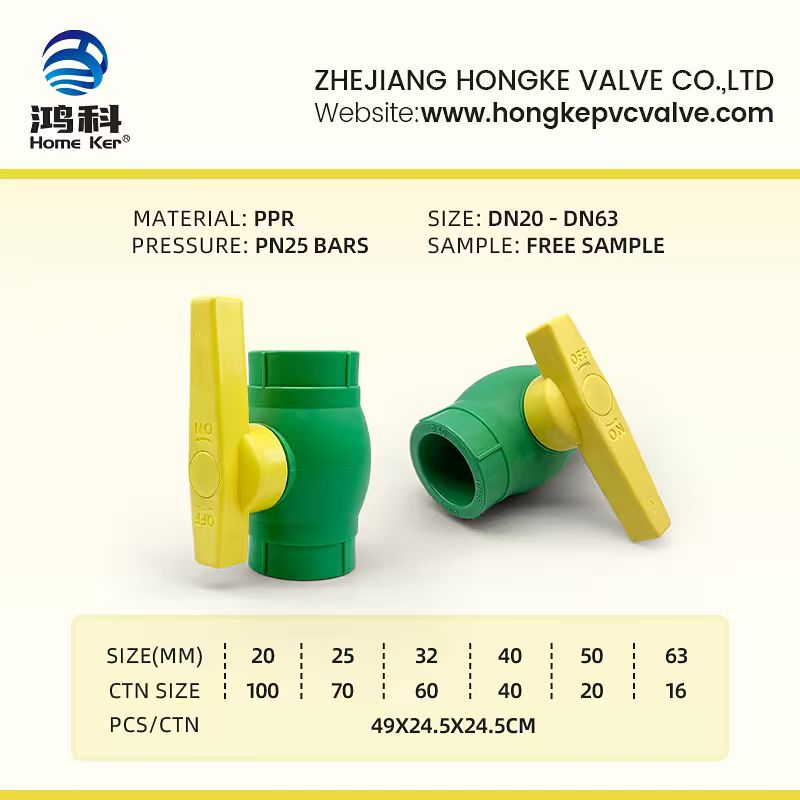
- Pressure Rating: Designed to handle standard PN20 and PN25 ratings, ensuring safety in high-pressure installations.
- Temperature Range: While optimized for ambient water, our high-grade PPR resins maintain structural integrity across a wide temperature spectrum.
- Joint Security: Designed for heat fusion welding, our valves create a “molecular bond” with the piping, effectively turning the entire system into a single, leak-proof unit.
Why Partner with HONGKE: The Factory-Direct Advantage
In today’s volatile market, big-box suppliers often demand massive orders that tie up your cash flow. HONGKE redefines the “factory-direct” relationship by offering:
1. Unmatched Flexibility: 5-Carton MOQ
We believe that growth should be accessible. HONGKE offers an incredibly low MOQ of just 5 cartons per size. This allows you to:
- Maintain a diverse size range (from 20mm to 110mm) without over-stocking.
- Fulfill specialized project requirements without purchasing thousands of units you don’t need.
2. Rapid Production Cycles
Time is a critical asset in the construction industry. Our integrated production lines allow for short lead times, ensuring that your project stays on schedule. By managing everything from injection molding to final pressure testing under one roof, we eliminate the delays common with third-party trading agents.
3. Engineering Precision and Quality Control
As a dedicated manufacturer, every PPR Ball Valve leaving our Zhejiang facility undergoes strict quality checks. We ensure that the ball torque is consistent and the seals are perfectly seated, providing a “Strong & Durable” product that reflects your brand’s commitment to quality.
Conclusion: Elevate Your Water System Reliability
The right PPR Ball Valve is an investment in the longevity of your water infrastructure. By choosing HONGKE, you gain the technical benefits of premium PPR material combined with the commercial agility of low MOQs and fast delivery.
Ready to upgrade your inventory? Contact our sales team today to request a technical data sheet or a wholesale quote for your next project.
People Also Ask (FAQ)
Q: What is the lifespan of a PPR Ball Valve in a standard water system? A: When installed correctly and used within its specified pressure and temperature ratings, a high-quality PPR ball valve can last over 50 years. Its resistance to corrosion and scaling ensures it remains functional long after metal valves might fail.
Q: Can HONGKE PPR Ball Valves be used for both hot and cold water? A: Yes. PPR is a versatile material. While this guide focuses on ambient water systems, our PPR valves are designed to handle the thermal expansion and pressure requirements of both hot and cold potable water distributions.
Q: Why does HONGKE offer such a low MOQ of 5 cartons? A: We aim to support distributors of all sizes. By offering a 5-carton MOQ per size, we help our partners manage their inventory more efficiently and reduce the financial risk of entering new markets or stocking new sizes.
Q: How do I ensure a leak-proof connection with a PPR valve? A: The most reliable method is heat fusion welding. By using a standard socket fusion tool, the valve and pipe melt slightly and fuse together, creating a permanent, leak-proof joint that is stronger than the pipe itself.