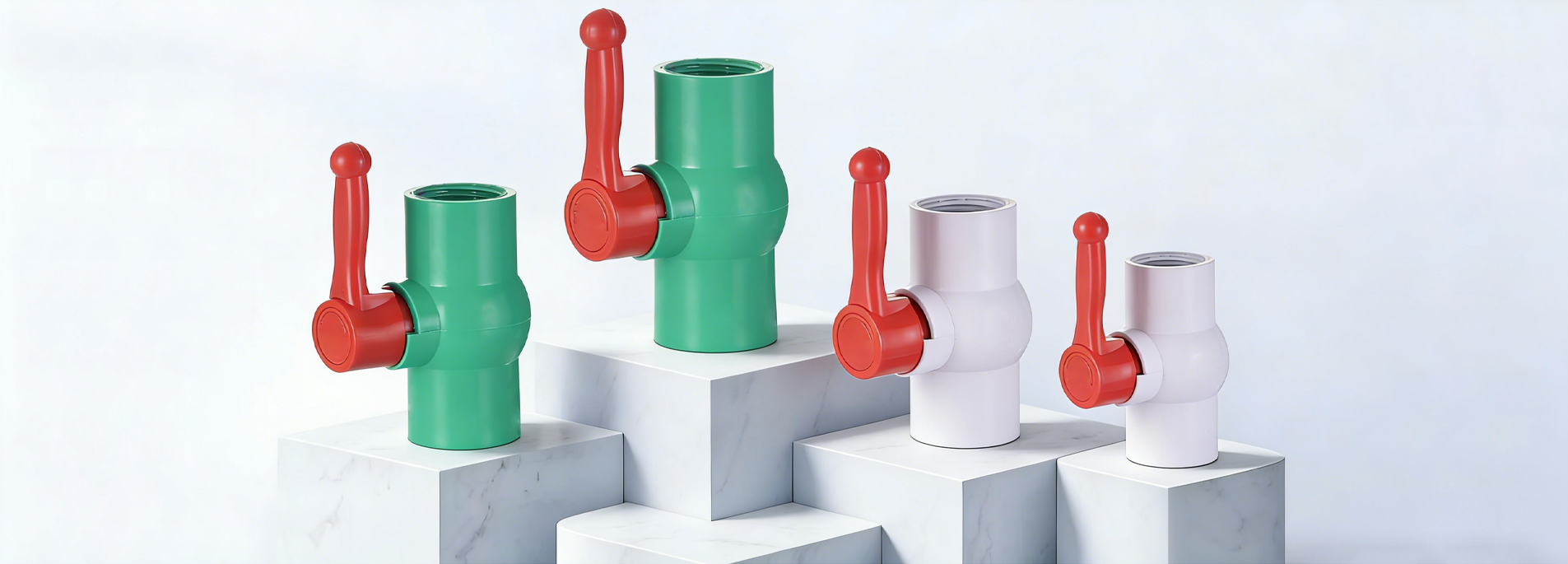

In high-pressure water systems—ranging from pump discharge lines to large-scale agricultural irrigation—the “standard” valve isn’t always enough. When your system operates at a constant load, understanding the pvc ball valve pressure rating becomes a matter of operational safety and asset protection.
A pvc ball valve 150 psi is often the baseline for professional-grade installations. However, a technical buyer knows that a “150 PSI” label is only as good as the factory’s testing protocol and the material’s temperature stability. As a factory-integrated manufacturer with 17 years of expertise, HONGKE (Zhejiang Hongke Valve Co., Ltd.) prioritizes transparency and rigorous engineering to meet these critical demands.
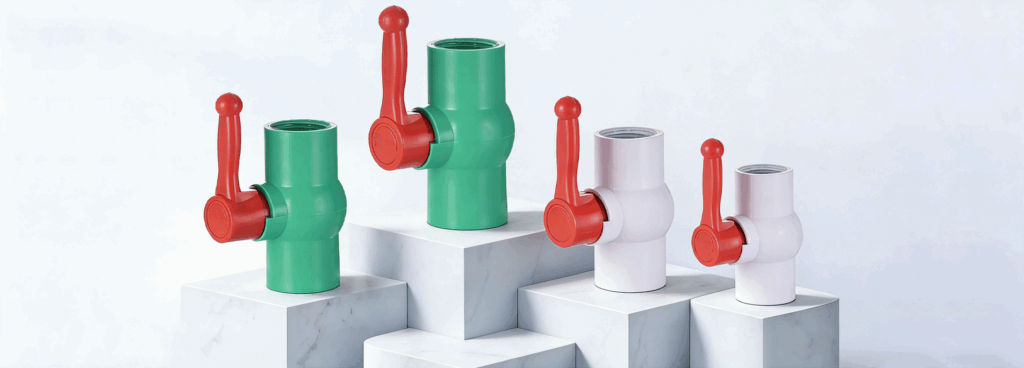
1. Understanding the 150 PSI Pressure Rating
The “150 PSI” designation (roughly equivalent to 1.0 MPa or PN10) refers to the maximum internal pressure the valve can withstand at room temperature (typically 73°F / 23°C). For technical buyers, this rating is the primary filter for system compatibility.
Why 150 PSI is the Industry Sweet Spot
- Pump Systems: Ideal for the discharge side of most commercial water pumps used in agriculture and RO systems.
- High-Lift Irrigation: Essential for moving water across significant elevation changes where head pressure builds up.
- Safety Factor: Choosing a 150 PSI rated valve for a 100 PSI system provides a necessary “cushion” for pressure spikes or minor water hammer events.
| Technical Parameter | Specification (HONGKE Standard) | Benefit |
| Working Pressure | 150 PSI (1.0 MPa) | Reliable daily operation |
| Shell Test Pressure | 225 PSI (1.5x Working) | Safety margin against surges |
| Seal Test Pressure | 165 PSI (1.1x Working) | Guaranteed zero-leakage |
| Applicable Media | Water, Neutral Liquids | Versatile industrial use |
2. The Critical Link: Pressure vs. Temperature
One of the most overlooked aspects of procurement is the 150 psi pvc ball valve temperature rating. As the temperature of the fluid or the ambient environment rises, the physical strength of PVC decreases.
To ensure system safety, you must apply a de-rating factor. For instance, at 110°F (43°C), a valve rated for 150 PSI at room temperature may only safely handle 75-80 PSI.
Comparison: PVC Ball Valve 150 PSI vs 200 PSI
When comparing a pvc ball valve 150 psi vs 200 psi, the difference is often in the wall thickness and the grade of the raw UPVC resin used. While a 200 PSI valve offers a higher ceiling, the 150 PSI model remains the most cost-effective choice for 90% of irrigation and general industrial water applications, provided the temperature-pressure curve is respected.
3. Why HONGKE is the Trusted Choice for Pressure-Sensitive Projects
When safety is a priority, the choice of a pvc ball valve 150 psi should lead you directly to the manufacturer.
100% Hydrostatic Testing
Unlike trading companies that perform “spot checks,” HONGKE conducts a 100% pressure test on every industrial batch. This means every valve that leaves our factory has been proven to hold its rated pressure without leakage.
Material Purity and UV Stabilization
Our valves are engineered for outdoor water systems. We use high-purity, UV-stabilized UPVC to ensure that sun exposure doesn’t degrade the material’s molecular structure, which could otherwise lead to brittle failure under pressure.
Wholesale Efficiency (3000 PCS MOQ)
We serve the B2B backbone. Our 3000 PCS MOQ per size allows us to maintain a dedicated, automated production line where precision is constant. This scale ensures that our 150 PSI rating isn’t just a label—it’s a manufacturing standard.
Safety Warning: While PVC is excellent for liquids, it should never be used for compressed air or high-pressure gases. Compressed gas stores significantly more energy than liquid, and a failure could result in hazardous fragmentation.
4. Installation Best Practices for High-Pressure Lines
- Avoid Water Hammer: Use slow-closing actuators or manual operation to prevent sudden pressure waves that can exceed the 150 PSI rating.
- Proper Support: High-pressure lines vibrate. Ensure the pipes are properly anchored so the valve body doesn’t bear the mechanical stress of the piping system.
- Thread Sealant: For NPT/BSPT threaded valves, use high-quality PTFE tape to ensure the connection is as strong as the valve body itself.
Conclusion: Reliability Under Pressure
A pvc ball valve 150 psi is a safety component as much as it is a flow control device. By choosing HONGKE, you are opting for a partner that provides 17 years of manufacturing transparency, 100% pressure testing, and factory-direct value.
Secure your high-pressure system today with a partner you can trust.
[Contact HONGKE for a Technical Quote and Pressure Test Data]
People Also Ask (FAQ)
Q: What is the actual pvc ball valve pressure rating for HONGKE products? A: Our standard industrial series is rated for a working pressure of 150 PSI at 73°F. We also offer higher-pressure variants (up to PN16/232 PSI) for specific industrial requirements.
Q: How does heat affect the 150 psi pvc ball valve temperature rating? A: As temperature increases, the maximum allowable pressure decreases. For example, at the upper limit of PVC (140°F), the pressure rating may drop by as much as 70%. For high-heat applications, we recommend switching to our CPVC line.
Q: In what scenarios should I choose a pvc ball valve 150 psi vs 200 psi? A: If your system has frequent pressure surges or operates near the 120-130 PSI mark, upgrading to 200 PSI provides a safer margin. For standard 60-80 PSI irrigation systems, the 150 PSI model is the ideal balance of cost and performance.
Q: Does HONGKE provide certification for these pressure ratings? A: Yes. As an ISO-certified factory, we provide internal test reports and can work with third-party inspectors to verify pressure ratings for large-scale government or industrial projects meeting our 3000 PCS MOQ.